
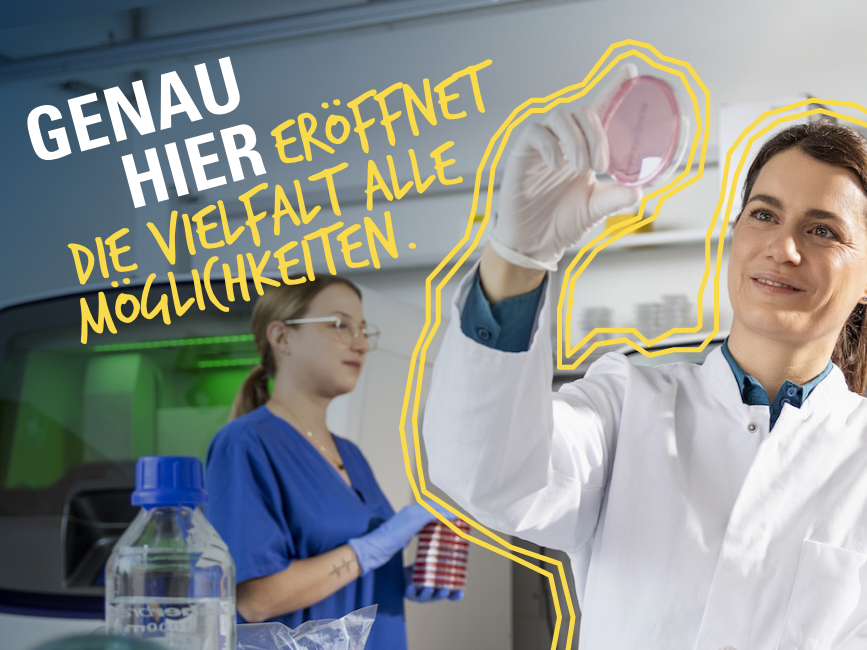
...you're in the middle of it
We are seeking a highly motivated PhD student to join our „Molecular Precision Medicine for Hormone-Driven Cancers" research group at the Department of Urology (Director: Prof. Felix Chun) and the Mildred Scheel Career Center (MSNZ) Frankfurt, an excellence program supporting careers in translational cancer research (funded by the German Cancer Aid). The lab, headed by Dr. Anne Fassl, specializes in developing novel strategies for targeted therapies in prostate and breast cancer. The position is initially limited to three years, with the possibility of extension.
Project description:
Advanced prostate cancer is characterized by extensive genetic heterogeneity and a profoundly altered tumor immune microenvironment, both of which contribute to disease progression and therapy resistance. Emerging evidence suggests that genetic alterations critically shape immune evasion and immune suppression likely explaining the limited efficacy of immunotherapy in prostate cancer that has been observed to date. The mechanisms linking genetics to immune modulation in advanced disease remain poorly understood.
This PhD project aims to dissect the interplay between genetics and the immune microenvironment in advanced prostate cancer using complementary in vitro, in vivo, and patient-derived approaches. The student will investigate how specific genetic alterations influence immune cell recruitment, activation, and function that shape the response to targeted prostate cancer therapies. Analyses of human tumor samples will be integrated with mechanistic studies in preclinical models of advanced prostate cancer.
The project will combine molecular profiling of tumor cells with immune characterization using flow cytometry, immunohistochemistry, and transcriptomic approaches. Functional in vitro immune cell assays will be employed to study tumor–immune interactions under controlled conditions, while in vivo experiments will allow validation of key mechanisms. Overall, this project seeks to identify genetic drivers of immune suppression or activation and to provide a mechanistic framework for genetically informed immunomodulatory strategies in advanced prostate cancer.